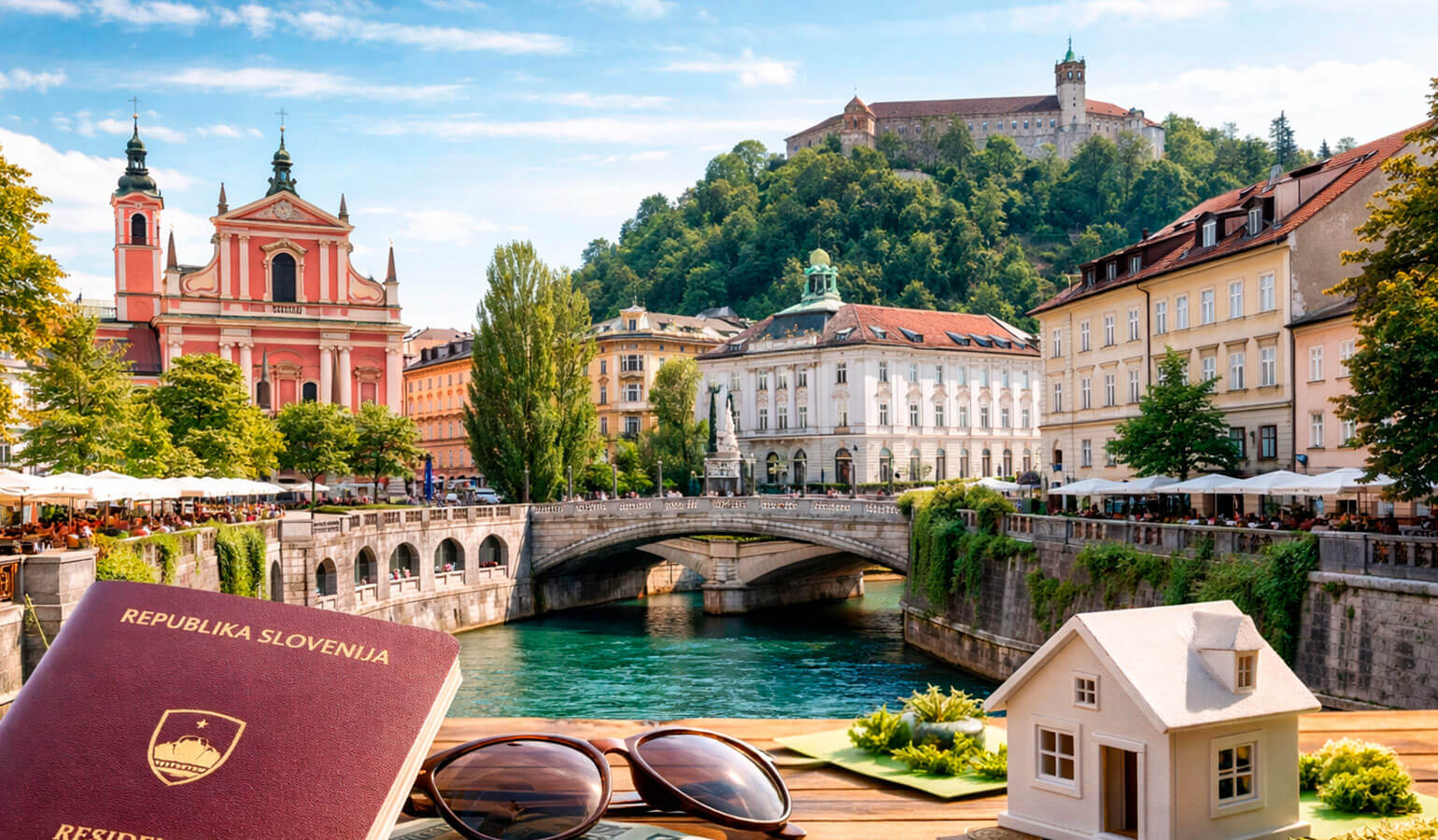

Family reunification is one of the most sought-after ways to legally bring loved ones to Slovenia, provided the main applicant already resides in the country on a legal basis. The procedure is formally regulated but, in practice, requires careful preparation—from confirming the applicant’s status and financial means to ensuring correct document translations and adherence to validity periods.
If you need case-specific support (eligibility check, document list, application submission, and communication with the Upravna enota), see our service: Family Reunification in Slovenia.
Who Can Apply for Family Reunification
The right to initiate the procedure is typically held by a foreign national residing in Slovenia on the basis of:
-
Permanent Residence (stalno prebivanje), or
-
Temporary Residence (začasno prebivanje), provided the status is stable and the applicant has generally resided in the country for a certain period (often a benchmark of at least 1 year and an extension for the next period).
In practice, the key factors are that the applicant holds a valid legal status and meets the income and housing requirements.
If you want to quickly understand if you meet the conditions and what a specific administrative unit might require, it’s more convenient to start with a case check: Family Reunification Consultation.
Who Can Be Reunited
In standard scenarios, the most common cases are reunification with:
-
Spouse / husband / wife;
-
Minor children (under 18 years old).
In individual cases, reunification with parents is possible, but this falls under more complex situations and usually requires proof that the parent needs care for medical reasons and that there are no other persons who can provide assistance.
Family Reunification Conditions: Primary Checkpoints
1) Applicant’s Status (Residence Permit/Permanent Residence) and Actual Residence
Administrative authorities assess whether the applicant:
-
Genuinely has a valid basis and status for residence;
-
Actually resides in the country and is capable of supporting the family.
2) Sufficient Financial Means
The applicant must provide evidence of income or savings sufficient to cover the family’s expenses. Authorities typically check:
-
Income stability;
-
Adequacy of the amount per family member;
-
The ability to support the family for the entire duration of the requested residence permit.
Evidence can include:
-
Employment contract and salary statements;
-
Bank statements (showing inflows and balances);
-
Savings account statements (statements for the last few months are often requested).
3) Availability of Accommodation
Proof that the family has a place to live is required. This is most commonly shown via:
-
A rental agreement for housing;
-
Confirmation of the right to use/own property.
Who Can Reunite Their Family Faster (Without Standard Waiting)
Depending on the applicant’s residence basis, simplified scenarios are possible. In practice, cases tend to proceed faster when:
-
Both parents already hold a residence status in Slovenia and are applying for their children;
-
The main applicant is a highly qualified professional (e.g., under an EU Blue Card);
-
Applying for a status for a newborn child, if one parent already holds a residence/permanent residence permit;
-
The applicant resides as a Digital Nomad (provided financial conditions are met).
To avoid misinterpreting “expedited processing” for your specific basis, it’s better to check the application scheme beforehand: Family Reunification Assistance.
Commonly Required Documents
The required set may vary depending on the situation, but most often includes:
-
Family reunification application;
-
Proof of relationship: marriage certificate, children’s birth certificates;
-
Copies of passports for the applicant and family members;
-
Proof of income/financial means (salary, bank statements, savings);
-
Proof of accommodation (rental agreement/property documents);
-
Passport-sized photographs;
-
Health insurance (as required for the case);
-
Police clearance certificate – depending on the situation (not always, depends on circumstances and applicant category).
It is critical to pay attention to:
-
Validity periods of certificates;
-
Correct translation into Slovenian;
-
Document legalization/apostille, if required.
Where to Apply
Applications are usually submitted:
-
To the Upravna enota (Administrative Unit) according to the applicant’s place of residence in Slovenia;
-
If family members are outside Slovenia – documents can be submitted through a consulate/embassy, with processing continuing in Slovenia under the jurisdiction of the relevant administrative unit.
Processing Timeframes: What to Expect
Processing times depend on:
-
The workload of the specific Upravna enota;
-
The quality of the document package (requests for additional documents often prolong the review);
-
The case category (some bases are given priority).
Realistically, expect a timeframe ranging from several months and plan the move with a time buffer.
Common Mistakes That Cause Delays
-
Incomplete document package or non-compliance with formal requirements.
-
Errors in translations/apostilles/validity periods of certificates.
-
Insufficient proof of financial means: income exists, but clear “family coverage” is not demonstrated.
-
Issues with accommodation: lack of a proper contract or unclear right of use.
-
Inconsistencies in document data (different spellings of names, dates, places of birth).
How We Assist with Family Reunification
If you want to navigate the procedure without unnecessary delays, we:
-
Check your eligibility for application based on your specific situation (Residence Permit/Permanent Residence/basis);
-
Prepare a precise list of documents tailored to your specific Upravna enota;
-
Proactively address risks related to translations, validity periods, and financial proofs;
-
Manage the application submission and all communication with the case officer.
For service details and support formats: Family Reunification Support